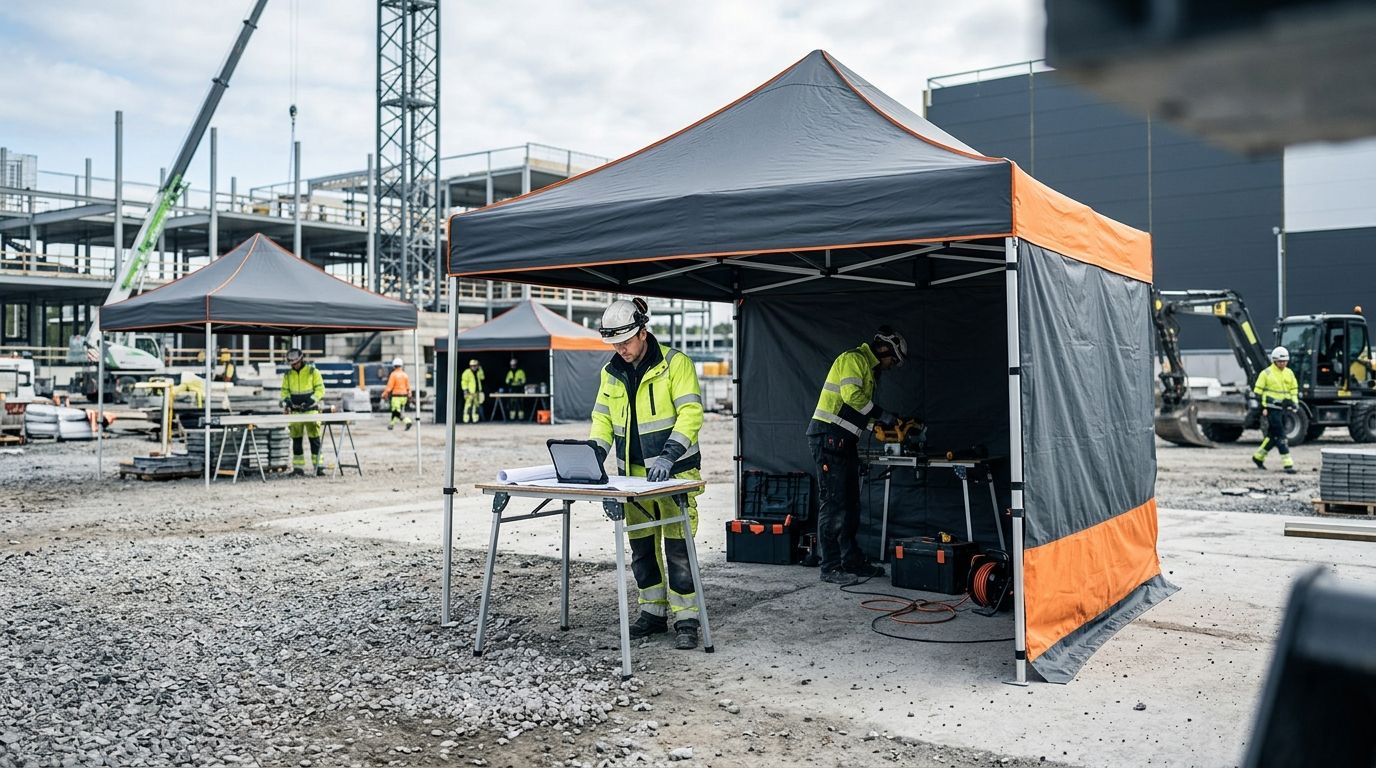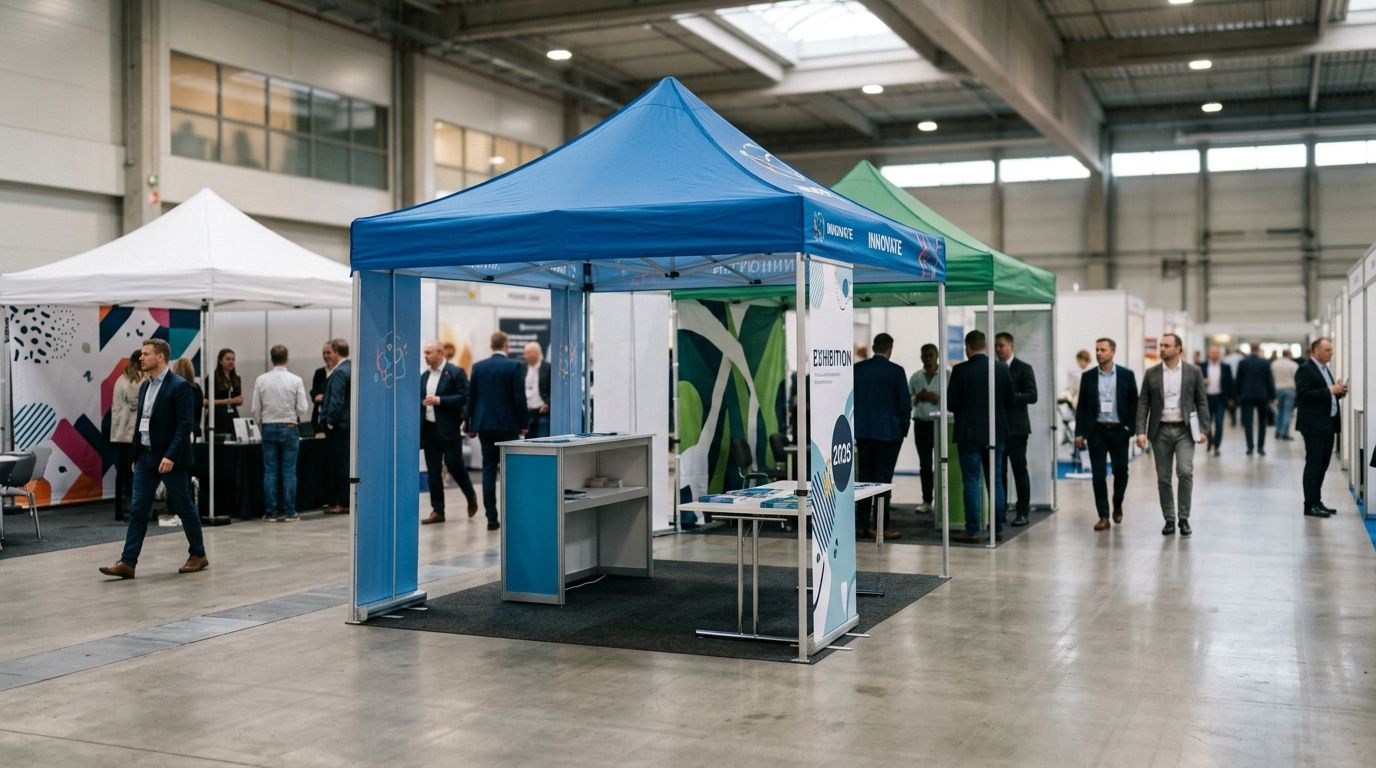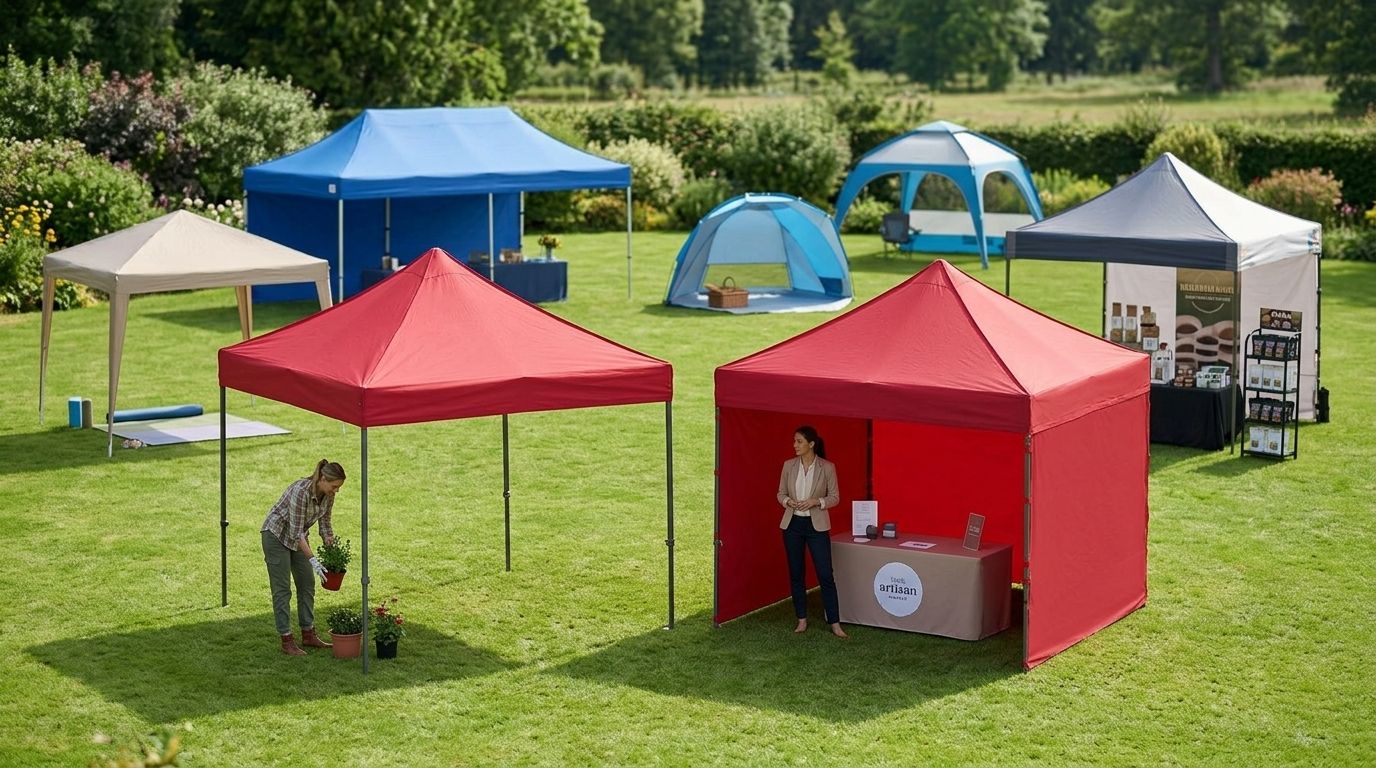
Choosing the paras pop up teltta for 2026 depends on one thing: how often you'll set it up and where. This guide ranks seven pop-up tent types by frame, fabric and real-world use case, from weekend garden parties to HoReCa terraces running events every weekend.
- Aluminum hex-frame pop-up tents are the paras pop up teltta pick for frequent business use in 2026 - fastest setup, lightest carry weight.
- Steel-frame pop-up tents remain the budget choice for occasional home garden use.
- PVC-coated commercial tents with reinforced roofs handle HoReCa terraces and outdoor service best.
- Printed pop-up tents double as advertising space at trade fairs and markets.
- Compact 2x2m tents suit tight stalls where a 3x3m footprint won't fit.
Why this matters
A pop-up tent bought for the wrong job fails within a season. Steel frames sag under repeated daily folding at markets; thin polyester canopies fade and leak after one wet Finnish summer on a terrace. Telttamaailma supplies pop-up tents, awnings and party tents to both home users and businesses - trade fairs, HoReCa outdoor seating, and events - which is exactly the split this ranking is built around.
Getting the frame material and canopy grade right up front saves a second purchase in 2026. The seven types below cover the full range from casual weekend use to daily commercial deployment.
What makes the best pop-up tent
- Frame material - aluminum for weight and corrosion resistance, steel for lower cost and more bulk
- Canopy fabric - polyester for home use, PVC-coated or heavier-gauge fabric for commercial weather exposure
- Setup time and pack size - hex-frame designs fold to a bag two people can carry; steel frames need more hands and space
- Wind and weather rating - reinforced roof seams and guy-rope points matter more than fabric color or print
- Branding capacity - printed canopy panels only make sense if you need advertising visibility at a stall or fair
- Footprint flexibility - 2x2m, 3x3m and larger modular sizes serve different stall or terrace layouts
Pop-up tent types at a glance
| Type | Best for | Standout feature | Key limitation |
|---|---|---|---|
| Aluminum hex-frame 3x3m | Frequent business use | Fast one-person setup | Costs more than steel |
| Steel-frame pop-up tent | Occasional home use | Lower upfront cost | Heavier to carry and fold |
| PVC-coated commercial tent | HoReCa outdoor service | Reinforced roof handles rain | Bulkier storage footprint |
| Printed pop-up tent | Trade fair advertising | Branded canopy panels | Print limits resale value |
| Compact 2x2m pop-up tent | Tight stall footprints | Smallest packed size | Less usable floor space |
| Waterproof pop-up gazebo with sidewalls | Family garden parties | Enclosed sides block wind | Slower to pitch than open canopy |
| Modular multi-bay pop-up tent | Large events, multiple stalls | Links into rows | Needs more than one person to assemble |
The seven picks ranked
1. Aluminum hex-frame 3x3m pop-up tent: best pop-up tent for frequent business use
The hex-frame design uses an aluminum accordion structure that one person can pop open and lock in under two minutes. It's the standard configuration for weekly markets, trade fairs and mobile sales stands where setup speed decides whether you're open on time.
Aluminum hex-frame pros:
- Folds to a compact carry bag with wheels on most models
- Corrosion-resistant frame holds up to repeated outdoor storage
- Fastest setup of any type in this ranking
Aluminum hex-frame cons:
- Costs more upfront than a steel-frame equivalent
- Lighter frame needs guy ropes or weights in strong wind
Best for: businesses running the same tent weekly at markets or fairs. Verdict: Buy.
2. Steel-frame pop-up tent: best pop-up tent for occasional home use
Steel-frame tents trade weight for cost. The thicker tubing is more forgiving of rough handling, which suits a tent that comes out three or four times a year for a birthday party or a garden gathering rather than every weekend.
Steel-frame pros:
- Lower cost of entry among pop-up tent types
- Sturdier under casual, infrequent handling
- Widely available in standard 3x3m sizing
Steel-frame cons:
- Noticeably heavier to carry and pitch than aluminum
- Rust risk increases if stored damp between uses
Best for: home users who need a tent a handful of times per year. Verdict: Buy if budget is the deciding factor.
3. PVC-coated commercial pop-up tent: best pop-up tent for HoReCa outdoor service
Restaurants and cafés running terrace service need a canopy that survives daily exposure, not just occasional weekend use. PVC-coated fabric with a reinforced roof seam holds up against rain and UV exposure across a full Finnish summer season better than standard polyester.
PVC-coated commercial pros:
- Reinforced roof resists pooling and leaks in rain
- Fabric holds color and structure under daily sun exposure
- Frame options rated for longer daily deployment
PVC-coated commercial cons:
- Heavier and bulkier to store between shifts
- Overkill for a tent used only a few weekends a year
Best for: HoReCa businesses running terrace or outdoor seating through the season. Verdict: Buy for daily commercial use.
4. Printed pop-up tent: best pop-up tent for trade fair advertising
A printed canopy turns the tent itself into signage. For businesses working trade fairs or sponsored events, the branded panels do double duty as shelter and advertising without a separate banner stand.
Printed pop-up pros:
- Canopy panels carry logo or branding across all visible sides
- Removes the need for separate advertising signage on-site
- Available on the same aluminum or steel frame options as unprinted models
Printed pop-up cons:
- Custom print limits resale or repurposing later
- Lead time on printed panels is longer than stock canopy colors
Best for: trade fairs, sponsored events and brand visibility campaigns. Verdict: Buy if advertising space matters more than flexibility.
5. Compact 2x2m pop-up tent: best pop-up tent for tight stall footprints
Not every stall has room for a full 3x3m frame. The 2x2m format packs smaller and sets up in less space, which matters at crowded markets or narrow event aisles where footprint is fixed by the organizer.
Compact 2x2m pros:
- Smallest packed size of any type on this list
- Fits stall footprints that reject a standard 3x3m tent
- Still available in aluminum or steel frame
Compact 2x2m cons:
- Less usable floor space for product display or seating
- Not practical for events needing shade for multiple staff
Best for: vendors working assigned stalls with a fixed, smaller footprint. Verdict: Buy for space-constrained stalls only.
6. Waterproof pop-up gazebo with sidewalls: best pop-up tent for family garden parties
Adding zippered sidewalls turns an open canopy into an enclosed space that blocks wind and light rain, which is what a garden party or backyard event actually needs over a bare frame.
Sidewall gazebo pros:
- Sidewalls block wind and give privacy for family gatherings
- Waterproof coating handles light rain without a rush to pack up
- Works as an open canopy or fully enclosed space
Sidewall gazebo cons:
- Slower to pitch than an open hex-frame canopy
- Sidewalls add weight to the storage bag
Best for: home gardens hosting parties or family events outdoors. Verdict: Buy for weather-exposed backyard use.
7. Modular multi-bay pop-up tent: best pop-up tent for large events
When one tent isn't enough, modular bays link edge to edge into a continuous row. This suits large events, multi-vendor markets or trade fair rows where several stalls need matching shelter under one visual line.
Modular multi-bay pros:
- Links multiple bays into a continuous covered row
- Consistent look across a full row of stalls or stands
- Scales up without switching tent type between stalls
Modular multi-bay cons:
- Needs more than one person to assemble a full row
- Storage and transport take up more space than a single tent
Best for: event organizers covering multiple stalls or stands in one row. Verdict: Buy for multi-vendor event layouts.
How this was ranked
Each type was scored against the six criteria above - frame material, canopy fabric, setup time, weather rating, branding capacity and footprint flexibility - then matched to the single use case it serves best. No type competes with another for the same slot, so the list reads as a decision tree: pick your use case first, then the tent follows.
Find your pop-up tent match
Browse pop-up tents, awnings and party tents for home and business use.
Which pop-up tent should you choose?
For most buyers weighing the paras pop up teltta question in 2026, the aluminum hex-frame 3x3m tent is the default pick - fast setup, low weight, and durable enough for weekly business use. Home users pitching a tent a few times a year should take the steel-frame model instead and save the upfront cost. HoReCa operators running a terrace through the season need the PVC-coated commercial tent regardless of price, because a torn roof mid-shift costs more than the upgrade.
If advertising space is the priority, the printed canopy wins over any unprinted frame. If floor space is fixed by an event organizer, the compact 2x2m size solves a problem no larger tent can.
FAQ
What's the best pop-up tent for business use in 2026?
An aluminum hex-frame 3x3m pop-up tent is the best pop-up tent for frequent business use in 2026 because it sets up in under two minutes and folds to a compact carry bag. It suits weekly markets, trade fairs and mobile sales stands.
Is a steel-frame pop-up tent better than aluminum?
Steel-frame pop-up tents cost less but weigh more and are slower to fold than aluminum. Aluminum wins for frequent use; steel is fine for a tent pitched a few times a year.
How much does a pop-up tent cost?
Pricing varies by frame material, size and canopy grade, so check current pricing directly through a retailer rather than relying on a fixed figure.
What size pop-up tent do I need for a market stall?
A 3x3m pop-up tent is the standard market stall size, but a 2x2m compact tent fits tighter footprints assigned by event organizers.
Do pop-up tents work for HoReCa terraces?
Yes, but a PVC-coated commercial pop-up tent with a reinforced roof is the right grade for daily outdoor service through a full season - standard polyester canopies wear out faster under daily use.
Can a pop-up tent be printed with a logo?
Yes, printed pop-up tents carry branding across the canopy panels and are common at trade fairs and sponsored events. Custom printing does limit resale value later.
Are pop-up gazebos with sidewalls worth it for home use?
For garden parties and family events, sidewalls add wind and light rain protection that an open canopy doesn't, at the cost of a slightly slower setup.
What's the difference between a pop-up tent and a modular multi-bay tent?
A single pop-up tent covers one stall; a modular multi-bay tent links several bays edge to edge for large events or multi-vendor rows needing a continuous line of shelter.
One last thing
The detail buyers skip most often is storage between uses: a steel-frame tent left folded damp rusts faster than the fabric wears out, which quietly shortens its working life well before 2026's next season starts. Dry the frame fully before bagging it, regardless of which of the seven types you land on.